BACK
about us
OUR MOST POPULAR TREATMENTS

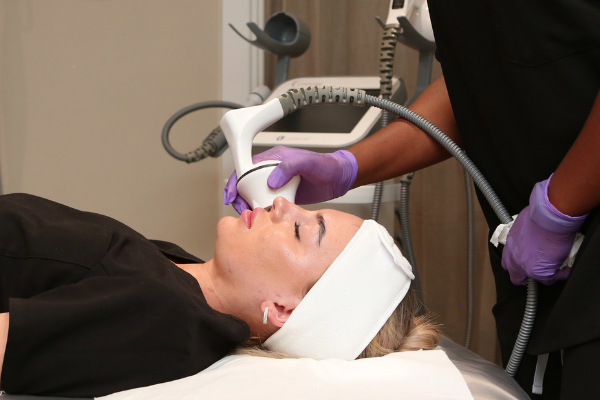


Redness & Rosacea
Learn about flushing, sensitivity, and persistent facial redness.
Discover concern
Redness & Rosacea
Learn about flushing, sensitivity, and persistent facial redness.
Discover concern
Noticing more scalp through your hair, a wider parting or a ponytail that no longer feels as thick can be worrying, especially when every search seems to lead to another product or treatment promising dramatic regrowth.
PRP is one option you may have come across. But does PRP actually work for hair loss, who is it best suited to, and what kind of results can you expect?
PRP is designed to support stronger, fuller-looking hair by working with follicles that are still active. It is particularly well suited to early or moderate thinning, when there is still existing hair to support.
That is why the first step is understanding what is happening to your hair and scalp, then creating a treatment plan around you.
PRP stands for Platelet-Rich Plasma. It uses a concentrated part of your own blood to support existing hair follicles and create a healthier environment for the scalp.
A small blood sample is taken and placed into a centrifuge, which separates the platelet-rich plasma from the other blood components.
The prepared PRP is then delivered directly into the areas of the scalp where thinning is being treated.
Platelets are naturally involved in the body’s repair processes. When PRP is used for hair restoration, the aim is to support follicles that are still present but producing finer, weaker hair.
Because PRP is prepared from your own blood, your treatment is personal to you and works alongside your body’s natural regenerative processes.
Not all PRP hair treatments are delivered in the same way.
Some clinics combine PRP with scalp microneedling or apply PRP topically after creating microchannels in the scalp.
That is not how we deliver PRP at Fiji Skin Clinic.
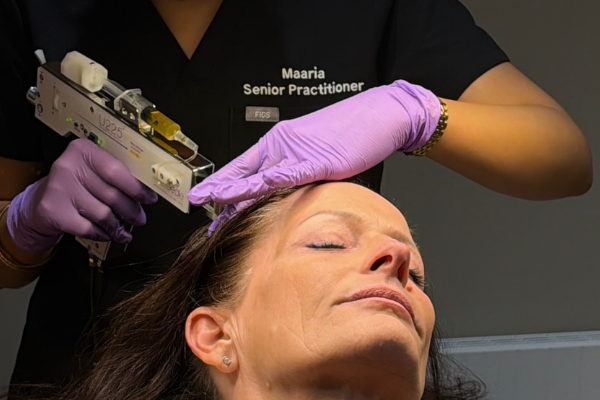
Our PRP is injected directly into targeted areas of the scalp using the U225 injector, rather than relying on topical application through microneedling.
The U225 allows us to control exactly where the PRP is placed and the depth at which it is delivered, giving us a precise and consistent way to treat areas of thinning.
It also uses extremely fine needles with rapid delivery, making PRP Hair Restoration virtually painless for most clients.
So if the thought of scalp injections has been putting you off, the treatment experience may be far more comfortable than you are expecting.
PRP has been widely studied for pattern hair loss, including male and female androgenetic alopecia, with research showing improvements in measures such as hair density and thickness in suitable clients.
PRP works best when follicles are still active and there is existing hair to support. Addressing thinning while those follicles are still functioning gives us more opportunity to support the hair before the loss becomes more advanced.
PRP may be particularly relevant if:
Early changes can include less excessive shedding, stronger-feeling hair and fine new hairs becoming more noticeable.
As the natural hair-growth cycle progresses, thinning areas may begin to look fuller and improvements in overall density can become easier to see.
At Fiji Skin Clinic, we track your progress with clinical reviews and comparison photographs, giving you a clearer way to see how your hair is responding over time.
Hair thinning is not one single condition, which is why understanding the reason behind the change is an important part of getting the right treatment.
Changes in your hair can be connected to:
Sometimes several factors can be involved at once.
During your consultation, we will discuss:
If your hair loss is sudden, patchy or accompanied by symptoms such as pain, itching, redness or scaling, we may recommend speaking to your GP, dermatologist or trichologist before starting treatment.
The goal is simple. We want to make sure the treatment you invest in is the right fit for what is happening with your hair.
PRP is particularly suited to clients who still have active hair growth but are beginning to notice a loss of thickness or density.
It can be a good option if you have early to moderate thinning, progressively finer hair, or want to support your existing hair before those changes become more advanced. It may also appeal if you are looking for a non-surgical approach to hair restoration.
Where an area has been completely bald for a long time or follicles have been permanently lost, a hair transplant may be more appropriate.
This is why your consultation matters. We can assess what is happening with your hair and recommend the treatment that makes the most sense for you.
PRP Hair Restoration is recommended as a course because supporting the follicles and hair-growth cycle takes repeated treatment over time.
At Fiji Skin Clinic, clients can begin with a course of 3 or 6 treatments, normally spaced two weeks apart.
Your recommended course will depend on the pattern and extent of your thinning, the areas being treated and your individual treatment goals.
Three months after your final treatment, you will return for a review with comparison photographs. We will assess your hair growth, density and scalp health, then discuss your progress and what happens next.
Where appropriate, maintenance PRP can then be recommended every three months. If another intensive course would benefit you more, this can be discussed at your review.
PRP hair results develop progressively because the treatment works alongside your natural hair-growth cycle.
Rather than seeing a dramatic change immediately after treatment, improvements build over the following weeks and months.
You may first notice less excessive shedding or that your hair feels stronger, followed by fine new hairs becoming more noticeable and thinning areas beginning to look fuller.
Visible improvements in density are best assessed over several months. This is why we use comparison photographs taken in consistent lighting and from similar angles.
When you see your hair every day, gradual progress can be surprisingly difficult to recognise.
This is one of the biggest concerns clients have before considering PRP.
Once your PRP has been prepared, it is delivered into the selected areas of your scalp using our U225 injector.
Its extremely fine needles and rapid, precise delivery make treatment virtually painless for most clients.
You may feel some mild pressure, tingling or an occasional brief pinching sensation. Afterwards, your scalp can feel slightly sensitive, and temporary redness or pinpoint marks, mild swelling or bruising is less common.
Most clients return to their usual routine quickly, with aftercare provided by your practitioner.
PRP and microneedling are sometimes grouped together online, but they are different treatment methods.
Microneedling creates controlled microchannels in the scalp, with topical products sometimes applied across the treated area afterwards.
At Fiji Skin Clinic, we do not rely on microneedling to deliver your PRP.
Instead, platelet-rich plasma is injected directly into targeted areas of the scalp using our U225 injector. This allows controlled placement and delivery depth for a more precise treatment approach.
Microneedling still has an important role in hair and scalp treatments, and we use it within other protocols including our exosome treatments. It simply works differently to our PRP Hair Restoration treatment.
Your hair can continue to change with age, hormones, health and genetics, so maintaining your results may require ongoing support.
Following your initial course and three-month review, maintenance PRP may be recommended approximately every three months where appropriate.
Rather than putting every client on the same long-term schedule, we build your maintenance plan around how your hair has actually responded.
PRP and exosomes can both be used as part of a treatment plan for thinning hair, but they work in different ways.
PRP is prepared from your own blood and delivered directly into the scalp using our U225 injector.
Our exosome hair treatment takes a different approach, combining microneedling with marine-derived exosomes and TargetCool™ CO₂ delivery to support the scalp and healthier-looking hair.
Which treatment is right for you will depend on factors such as:
For some clients, PRP will be the more suitable option. For others, exosomes or another treatment pathway may fit their hair and scalp needs better.
Learn more about microneedling with exosomes for hair and scalp concerns.
PRP Hair Restoration at Fiji Skin Clinic starts from £250.
Your total cost will depend on the treatment plan recommended and whether you choose a course of 3 or 6 sessions.
Following your consultation, we will explain the treatment plan we recommend, why we recommend it and the full cost before you make your decision.
There is no pressure to commit before you understand what you are investing in.
If your hair no longer feels as thick or full as it once did, and you want to support it before thinning becomes more noticeable, PRP Hair Restoration could be worth exploring.
At Fiji Skin Clinic, we look at what has changed, what may be contributing to it and what you would realistically like to improve.
From there, we can recommend PRP or discuss alternatives, including microneedling with exosomes, if another approach makes more sense for your hair.
If you are considering PRP hair treatment in Birmingham or Sutton Coldfield, book a consultation with our team and find out whether our direct U225 PRP treatment is right for you.
PRP works by supporting follicles that are still active, helping to strengthen existing hair and improve the appearance of density.
It is best suited to areas where hair is still growing but has become finer or thinner. Where follicles have been permanently lost, other options such as hair transplantation may be more appropriate.
Yes. PRP Hair Restoration can be a good option for selected women experiencing hair thinning.
Female hair changes can be influenced by hormones, nutrition, pregnancy, perimenopause, menopause, health and genetics, so understanding what is contributing to the change helps us build the right treatment plan.
PRP works alongside your natural hair-growth cycle, so changes build progressively over several months.
Some clients first notice reduced shedding or stronger-feeling hair, followed by changes in the appearance of density as the hair cycle progresses.
Your progress is reviewed three months after completing your course.
At Fiji Skin Clinic, PRP Hair Restoration is offered as a course of 3 or 6 treatments, usually spaced two weeks apart.
Your recommended course will depend on your pattern of thinning, treatment goals and how your hair responds.
They are different treatment methods.
Microneedling creates controlled microchannels in the scalp and can be used as part of treatments involving topical products.
Our PRP Hair Restoration treatment delivers platelet-rich plasma directly into the scalp using the U225 injector, allowing controlled placement and delivery depth.
Your practitioner can advise which approach best suits your hair and scalp.
PRP and hair transplantation are designed for different stages of hair loss.
PRP supports follicles that are still present and can be particularly useful when hair is becoming progressively finer or less dense.
A hair transplant moves follicles into areas where permanent hair loss has occurred. PRP may also form part of a wider hair-restoration plan following a transplant to support the scalp and surrounding existing hair, where clinically appropriate.
Book your consultation today.
Stay connected to your skin, with guidance you can trust. Receive expert insights, treatment updates, and special offers.
 Consultation
  ClearLift Pro
  ClearVas
  Iris Acne
  Iris Dye-VL IPL
  SupErb Resurfacing
  Tattoo Removal
  VascuPen Vein Removal
  Chemical Peels
  Dermalux Tri-Wave Light Therapy
  PRP (Platelet Rich Plasma)
  Skin Tag Removal
  HIFU
HIFU 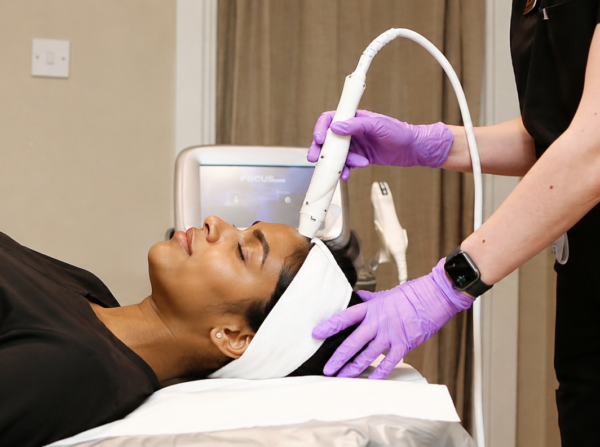 Radiofrequency Microneedling
 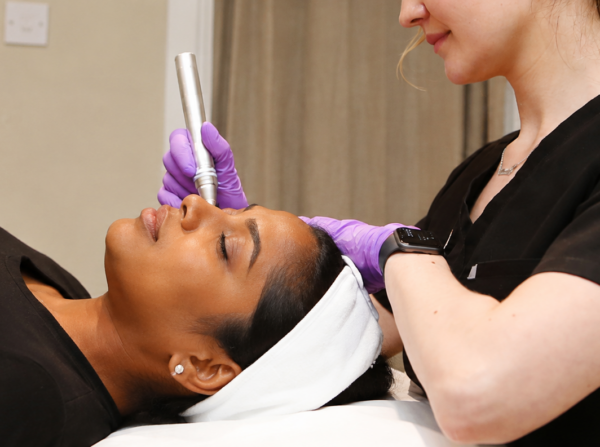 Dermapen Microneedling
  Exosomes
  Allergy & Intolerance Testing